Rooftop HVAC Placement
Position rooftop units, fan coils, chillers, and condensers into final location after the tower crane drops them on the roof slab. A 4400 or 6600 gantry rolls across the deck and sets the unit on the curb.
Mechanical contractors lift in locations a tower crane can't reach and a forklift can't enter. Rooftops past the parapet, fourth-floor mechanical rooms, pharma cleanrooms with sealed floors, data-center white-space with low overhead clearance. eme portable aluminum gantries ride the freight elevator in pieces, assemble in place, and roll the load to final position — while helping protect finished floors and controlled work areas, without blocking the corridor or extending the GC's mobilization schedule.
Six categories cover most of the equipment-placement lifts on a typical mechanical-contracting jobsite. The lift might be on a roof, in a basement, in a cleanroom, or in a data center, but the equipment that ends up doing the work is portable, rolls under load, and assembles on the floor it's needed on.
Position rooftop units, fan coils, chillers, and condensers into final location after the tower crane drops them on the roof slab. A 4400 or 6600 gantry rolls across the deck and sets the unit on the curb.
Boilers, pumps, AHUs, and chiller rooms on upper floors. The gantry rides the freight elevator in pieces, assembles in the mech room, and handles the lift the freight elevator delivers.
Cleanroom equipment positioning where forklifts contaminate the space and tower cranes can't reach the interior. Aluminum gantries roll on protected flooring without breaking the seal.
PDU placement, CRAH unit installs, server rack positioning in white-space. Low headroom under cable trays, tight aisles — exactly where a 2200 or 4400 gantry beats a forklift.
Skid-mounted equipment delivered on flatbeds, then walked into the mechanical room and lowered onto pad. The 6600 and 11000 gantries cover most of these lifts.
Process tanks, pressure vessels, expansion tanks — set into a strapped position on the housekeeping pad, often in a finished space where a permanent crane was never installed.
Mid-capacity gantries cover the majority of mechanical-contracting lifts. eme sizes the 4400 / 6600 / 11000 to span the typical HVAC, boiler, and chiller weight ranges.
The contractor's workhorse — most rooftop HVAC, mech room, and equipment placement lifts fall in this range. Six models, ground-up small-crew assembly.
See series→For the bigger chillers, larger HVAC units, and heavy boilers. Forklift-assisted assembly; rolls while loaded on prepared surfaces.
See series→When the mechanical room calls for a 5-tonne lift in a space the tower crane won't reach. Pairs with Eagle Beam for spread loads.
See series→Three jobsite photographs of eme aluminum gantries on real mechanical-contracting installs — HVAC placement, blower change-outs, and process-unit sets inside working mechanical rooms.
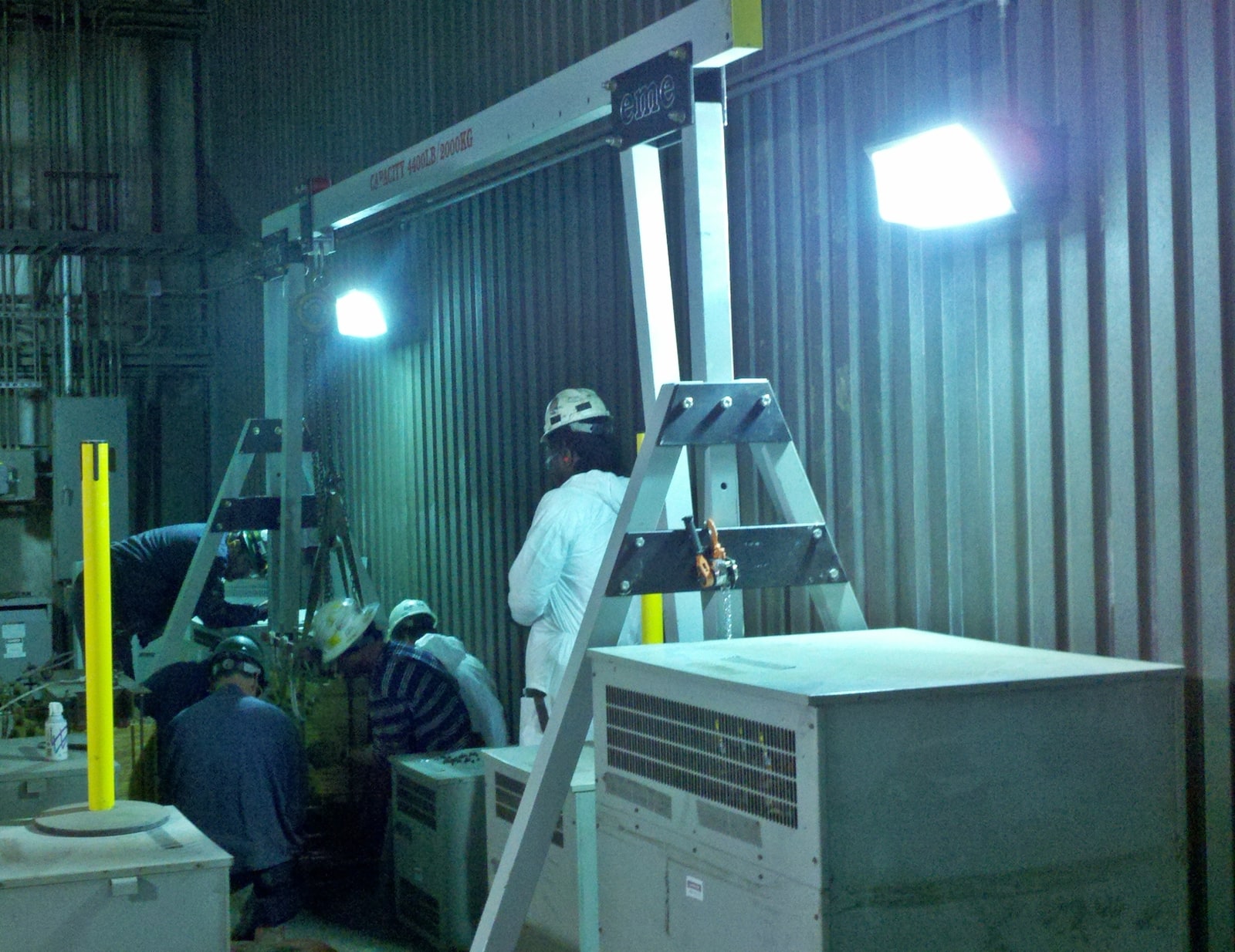
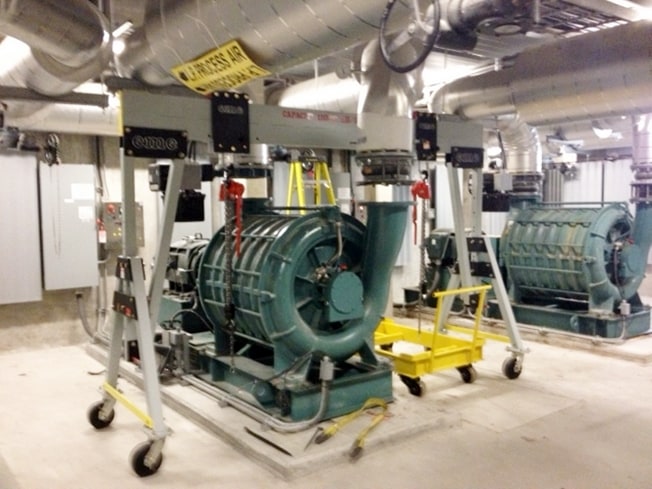
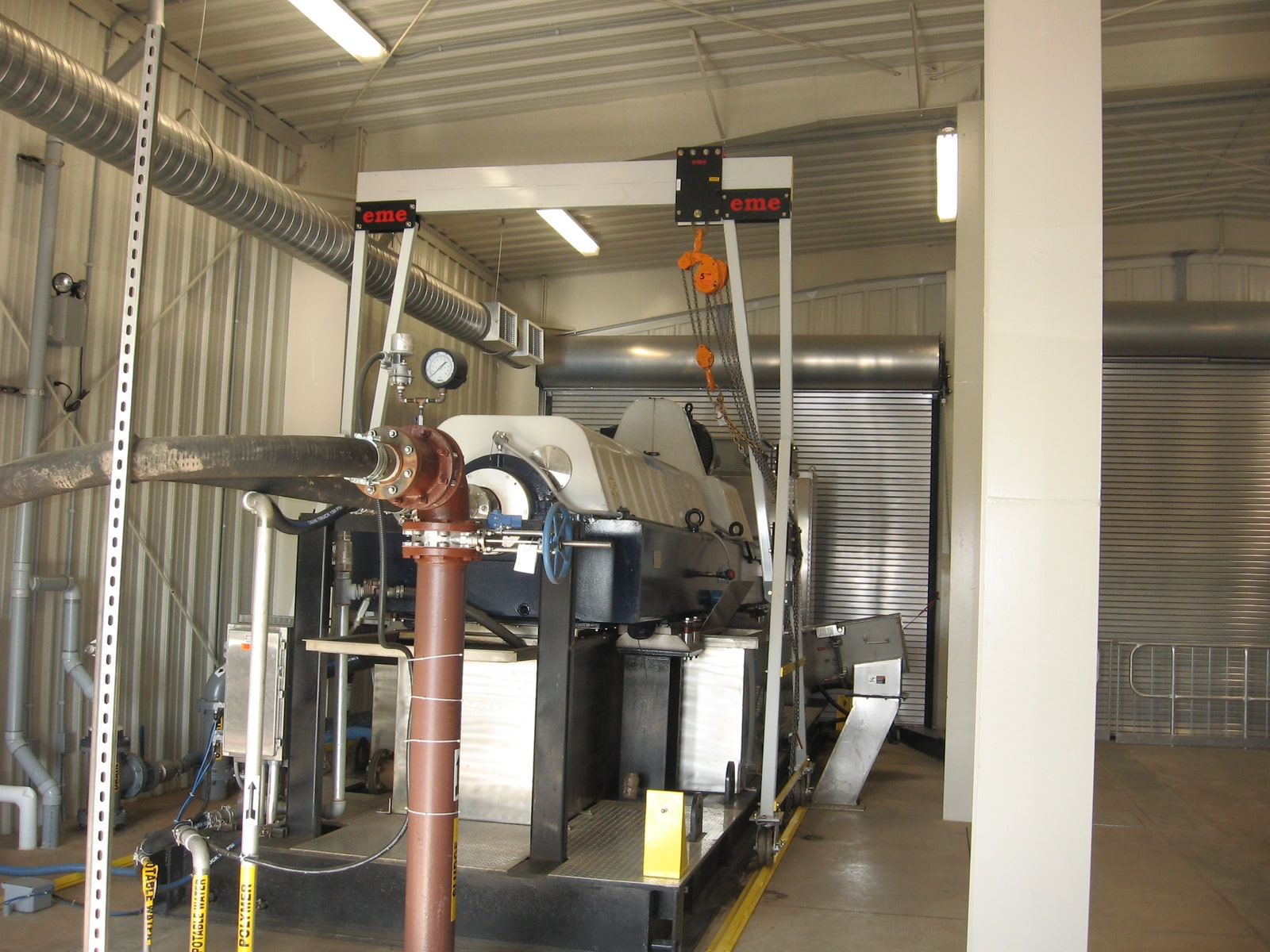
OSHA requires a crane to be proof-load tested to 125% of rated capacity before it is placed into service — an obligation on the employer putting the crane to work. eme completes that proof test on every gantry as part of its quality-control process, so each one ships with an engineer-stamped drawing and a Certificate of Test at 125% of rated capacity — the documentation a structural engineer, building inspector, or owner's rep needs to sign off on the lift plan, with the pre-service proof test already done. Gantries are engineered to applicable ASME and CSA lifting requirements and welded under CSA W47.2 certification by qualified aluminum welders.
Send us the equipment weight, the install floor, the access path, and the headroom. We'll spec the gantry, the trolley, and the accessories — and quote a configuration that fits the freight elevator and the doorway.
Tell us how to reach you. An eme specialist will follow up within one business day with pricing and availability.
Thanks — an eme specialist will follow up about your quote within one business day. If it's urgent, call 1-888-679-5283.
We couldn't send your request just now. Please email solutions@easilymovedequipment.com or call 1-888-679-5283 — or try again in a moment.